

 By
By 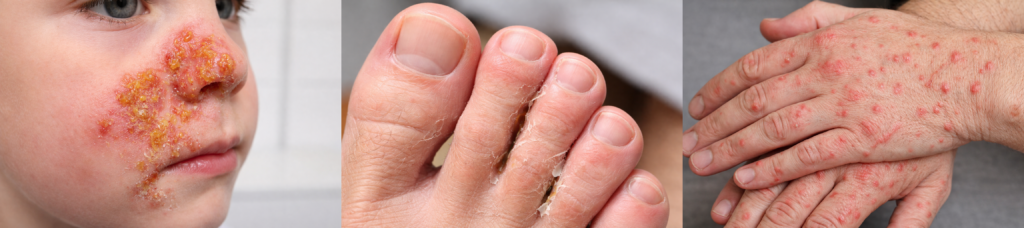
Introduction
Skin infections happen when harmful microorganisms enter your skin and start to multiply. These microorganisms may include bacteria, viruses, fungi, or parasites. While many skin infections are mild and easy to treat, some can become serious if left untreated.
Understanding skin infections, their symptoms, and prevention tips can help you protect your skin and overall health.
Types of Skin Infections
There are four main types of skin infections, each caused by a different type of pathogen.
1. Bacterial Skin Infection
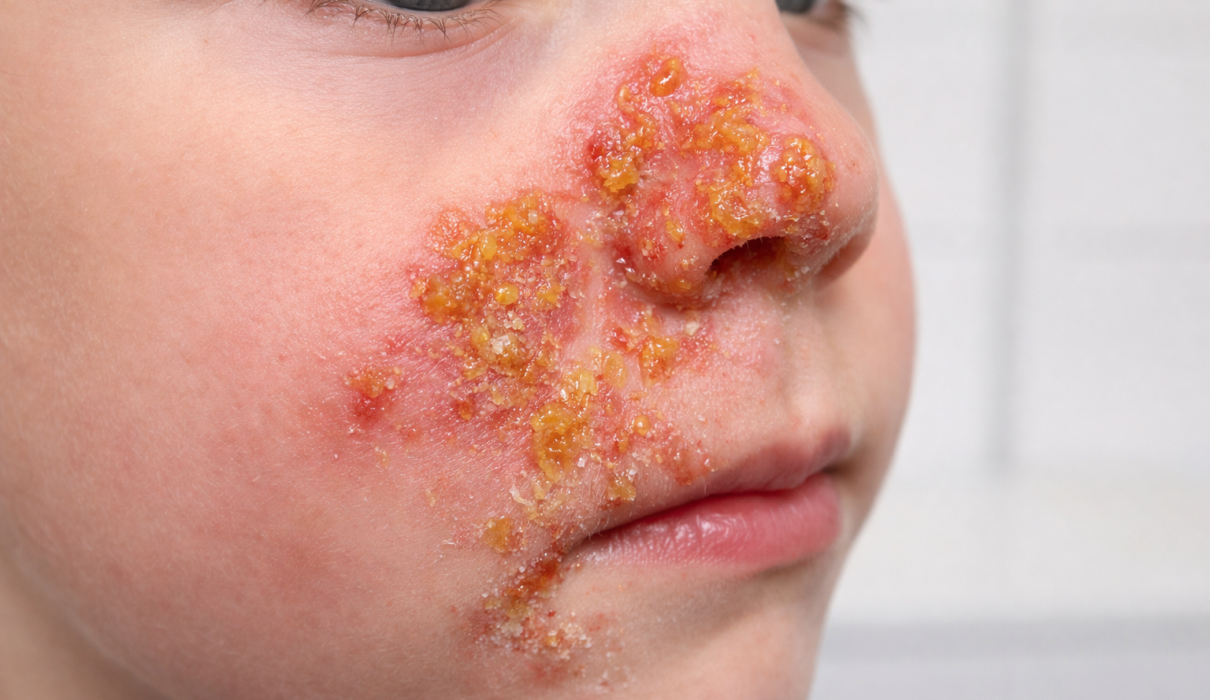
A bacterial skin infection occurs when bacteria enter through cuts, wounds, or insect bites.
Common examples:
- Impetigo
- Cellulitis
- Boils
- Folliculitis
Symptoms:
- Redness and swelling
- Warm or painful skin
- Pus-filled bumps
- Fever in severe cases
2. Viral Skin Disease
A viral skin disease is caused by viruses that spread easily from person to person.
Common examples:
- Warts
- Chickenpox
- Shingles
- Cold sores
- Molluscum contagiosum
Symptoms:
- Blisters or raised bumps
- Burning or tingling feeling
- Fatigue and fever
3. Fungal Skin Infection
A fungal skin infection usually develops in warm and moist areas of the body, such as the feet, underarms, and skin folds.
Common examples:
- Ringworm
- Athlete’s foot
- Nail fungus
- Yeast infection
Symptoms:
- Itchy and scaly skin
- Cracked or peeling skin
- Discolored nails
4. Parasitic Skin Infection
A parasitic skin infection is caused by tiny organisms living on or under the skin.
Common examples:
- Scabies
- Lice
- Bedbugs
Symptoms:
- Severe itching
- Rashes or burrow lines
- Crawling sensation
Symptoms of Skin Infections
- Red, dark, or purple patches
- Raised bumps or blisters
- Itching and burning
- Warm or painful skin
- Pus or fluid discharge
- Fever in severe infections
Symptoms of Skin Infections
- Red, dark, or purple patches
- Raised bumps or blisters
- Itching and burning
- Warm or painful skin
- Pus or fluid discharge
- Fever in severe infections
causes & Risk Factors
- Weak immune system
- Poor hygiene
- Cuts or wounds
- Excess sweating
- Sharing personal items
- Diabetes or poor circulation
When to See a Doctor
See a doctor if you have:
- Pus-filled blisters
- High fever
- Rapidly spreading redness
- Severe pain or swelling
- Repeated infections
Treatment
Treatment depends on the cause:
- Antibiotics for bacterial skin infection
- Antivirals for viral skin disease
- Antifungals for fungal skin infection
- Antiparasitic medicines for parasitic skin infection
Prevention & Skin Care Tips
Use these simple skin care tips to prevent infections:
- Keep skin clean and dry
- Wash hands regularly
- Do not share towels or razors
- Treat cuts immediately
- Wear breathable clothing
FAQ
Q: What are the main types of skin infections?
Bacterial, viral, fungal, and parasitic skin infections.
Q: Are skin infections contagious?
Some are contagious, such as scabies and impetigo.
Q: Can skin infections be treated at home?
Mild infections can be treated with OTC creams, but severe cases need medical care.
Takeaway
Skin infections are common but highly treatable when detected early. Keeping good hygiene and following proper skin care tips can greatly reduce your risk. Always consult a doctor if symptoms become severe.